If you are looking at a small multifamily property in San Francisco’s Mission, it is easy to focus on rent potential and miss the rules that shape the real investment. The Mission offers strong transit access, dense housing, and a building mix that attracts both new and experienced investors. But in this submarket, your success often depends just as much on tenant law, turnover, and permit strategy as it does on purchase price. Let’s dive in.
Why the Mission draws investors
The Mission is one of San Francisco’s most established urban neighborhoods, with a long residential history, mixed-use corridors, and strong transit access. The city’s Mission Area Plan describes the area as a place to live and work, with neighborhood-serving commercial streets and an ongoing focus on preventing displacement.
That context matters when you buy a 2 to 4 unit property here. You are not just buying income-producing real estate. You are buying into a neighborhood where housing policy, tenant protections, and preservation rules have a major influence on ownership strategy.
In ZIP code 94103, the market is dense and active. ACS 2024 5-year data shows 34,964 residents, 17,952 households, a median household income of $116,438, and 54.2% of adults with a bachelor’s degree or higher.
What small multifamily looks like here
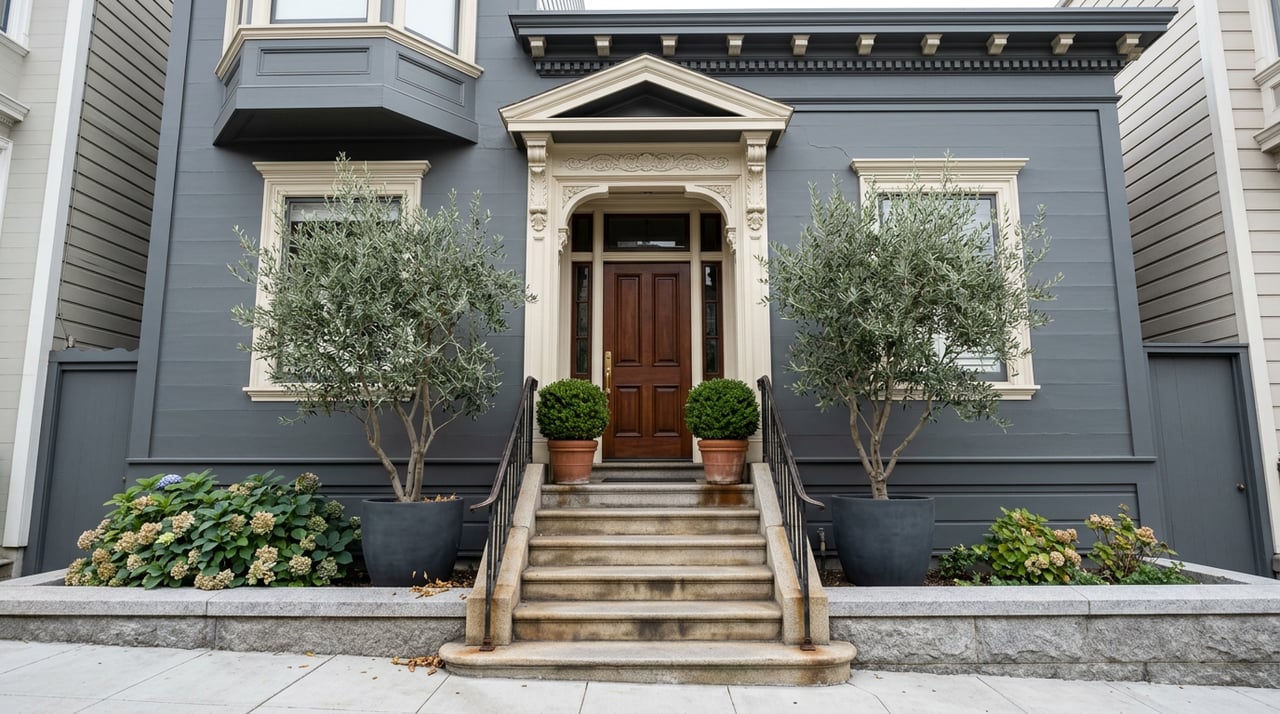
In the Mission, many 2 to 4 unit properties are older San Francisco buildings with character and complexity. According to the Mission District historic context report, you are likely to encounter Victorian and Edwardian flats, row houses, post-1906 wood-frame apartment buildings, Romeo flats, stacked flats, and later infill in Mission Revival, Craftsman, Spanish Colonial Revival, and Art Deco styles.
For investors, that building stock can create opportunity. Older properties may offer flexible layouts, street presence, and untapped upside through better operations or thoughtful improvements.
At the same time, age brings risk. If you plan exterior work that is visible from the street, San Francisco may require review for historic-resource impacts. The city notes that many properties start as category B until formal review clarifies status, so it is smart to check a property’s historic resource status early in your diligence.
Rent potential in the Mission
Current rent data gives a useful starting point for underwriting. Zumper’s Mission rent research reports a median neighborhood rent of $3,500 across all bedroom counts and property types as of April 2026, up 6% year over year.
The same source shows average rents of about $3,345 for a one-bedroom and $4,952 for a two-bedroom. If you apply that math broadly, a two-unit property could produce rough gross rents like these before vacancy, repairs, taxes, insurance, management, and legal constraints:
- Two 1-bedroom units: about $6,690/month
- One 1-bedroom plus one 2-bedroom: about $8,297/month
- Two 2-bedroom units: about $9,904/month
These numbers are only a starting point. They are not a property-specific valuation, and they do not account for whether units are occupied, how long tenants have been in place, or what local rules may limit future increases.
Why underwriting is different here
Mission small multifamily investing is rarely a simple rent-to-price calculation. In San Francisco, many buildings are shaped by local rent control, eviction protections, state law, and annual compliance requirements.
For many residential units built on or before June 13, 1979, San Francisco applies both rent control and eviction protection under its local framework. According to SF rental law guidance, the current allowable rent increase for covered units is 1.6% for March 1, 2026 through February 28, 2027.
That single number changes how you should model growth. If your plan depends on quickly raising occupied units to market rent, the deal may not work the way you expect.
Vacancy matters more than many buyers expect
One of the most important details in Mission underwriting is how vacancy affects rent strategy. San Francisco states that a vacant rent-controlled unit can be set at market rent when first leased, but once the new tenancy begins, future increases are subject to the rules that apply.
That means turnover is not just an operational issue. It is a core underwriting variable. If a duplex or triplex has long-term tenants in place, your near-term income path may look very different from a building with recent vacancy.
This is one reason occupied and vacant small multifamily buildings can trade on very different expectations, even when they look similar from the street.
Local rules to budget for
San Francisco also adds compliance steps that many first-time investors underestimate. The city requires owners to report unit data into the Rent Board Housing Inventory before imposing annual allowable or banked rent increases, and it also requires a rent increase license. The city’s rent increase guidance notes that this licensing rule applies to buildings with 1 to 9 residential units.
There are also recurring costs and administrative tasks. San Francisco owners face an annual Rent Board fee and annual housing inventory reporting obligations, which the city outlines in its Rent Board fee and inventory requirement notice.
When you build your operating budget, include:
- Annual Rent Board fees
- Housing inventory reporting
- Compliance time
- Professional support for legal or accounting questions
- Realistic reserves for repairs and maintenance
State law still matters
Even in San Francisco, you also need to account for California law. Under California Civil Code 1947.12, annual rent increases are generally capped at 5% plus local CPI, or 10%, whichever is lower, subject to the law’s rules and exemptions.
California also imposes statewide just-cause requirements under Civil Code 1946.2 after 12 months of lawful occupancy. San Francisco notes that where local rent or eviction protections already apply, those local rules remain in place.
Some buyers hear about owner-occupied duplex exemptions and assume a Mission deal will be simpler. That can be risky. California law includes narrow exemptions, including an owner-occupied property with two separate dwelling units in a single structure, but your actual coverage can depend on ownership structure, occupancy history, and whether local San Francisco rules still apply.
Exit strategy can be more limited
Your exit plan deserves just as much attention as your income assumptions. In San Francisco, owner move-in is not a simple shortcut.
The city says an owner or qualifying relative must use the unit as a principal residence for at least 36 continuous months. Only certain close relatives qualify, the ordinance generally permits owner-occupancy eviction from only one unit per building, and some tenants with protected status may be shielded from owner move-in evictions in buildings with 2 or more units. You can review those details in the city’s owner or relative move-in eviction guidance.
San Francisco also publishes separate relocation schedules for no-fault scenarios such as owner move-in, demolition, permanent removal, temporary capital improvement work, substantial rehabilitation, and Ellis Act withdrawals. Those schedules can materially affect your costs and hold period, as shown in the city’s current rates and relocation materials.
In practical terms, that means your business plan should answer these questions before you write an offer:
- Are the units occupied or vacant?
- Which units may be subject to local rent control?
- What is the current in-place rent?
- What turnover assumptions are realistic?
- Could planned exterior work trigger historic review?
- Does your hold strategy depend on a move-in or no-fault exit?
- Have you budgeted for relocation and compliance costs?
How to think about value-add deals
In the Mission, value-add investing can still make sense, but the path is often slower and more detail-heavy than buyers expect. Cosmetic interior improvements on a vacant unit may be very different from a plan that depends on exterior upgrades, additions, or major repositioning.
Because many Mission buildings are older, permit complexity can affect both timeline and cost. Street-visible façade work or alterations may trigger review, so a fast-flip mindset does not always fit this submarket.
A more durable approach is to underwrite conservatively, verify the legal and physical facts early, and treat regulation as part of the asset itself. In this neighborhood, discipline is often the edge.
What smart buyers do before making an offer
If you are serious about small multifamily investing in the Mission, your diligence should start before you negotiate the final price. A strong process can help you avoid expensive surprises.
Focus on these steps:
Review occupancy carefully Ask who occupies each unit, how long they have been there, and what the current rent is.
Confirm rent-control exposure Many older buildings may fall under San Francisco’s local rules, especially if units were built on or before June 13, 1979.
Check compliance history Look into Rent Board obligations, housing inventory reporting, and whether the seller has kept records in order.
Evaluate renovation assumptions If your plan includes visible exterior changes, verify whether preservation or planning review may be involved.
Model multiple scenarios Run numbers for current rents, partial turnover, and delayed improvements so you can see how sensitive the deal is.
Bring in professionals early The city’s tenant protection framework is detailed enough that buyers should consult a landlord-tenant attorney and a financial professional before underwriting an occupied purchase.
The Mission investment takeaway
The Mission remains one of San Francisco’s most interesting neighborhoods for 2 to 4 unit investors. It offers established housing stock, strong transit access, and rent levels that can support long-term interest from buyers who want both income and location.
But this is not a plug-and-play market. The real opportunity comes from understanding how building age, tenant protections, vacancy, and compliance rules interact. If you underwrite those factors with care, you can make better decisions and avoid paying for upside that may not be available on your timeline.
If you want help evaluating a Mission small multifamily opportunity with a neighborhood-level lens and a disciplined process, connect with David Juarez. Level Up Group works with Bay Area investors who want clear guidance, sharper underwriting conversations, and a strategy grounded in how San Francisco properties actually perform.
FAQs
What makes Mission District multifamily investing different from other Bay Area markets?
- Mission District investing is heavily shaped by San Francisco rent control, eviction protections, compliance requirements, and possible historic-review issues for older buildings.
Can you raise rents to market right away in a Mission small multifamily property?
- You can generally set a covered vacant unit at market rent when it is first leased, but once a tenant is in place, San Francisco’s ongoing rent increase rules may apply.
What types of 2 to 4 unit buildings are common in San Francisco’s Mission?
- Common building types include Victorian and Edwardian flats, row houses, post-1906 wood-frame apartment buildings, Romeo flats, stacked flats, and later infill in several early 20th-century styles.
Do San Francisco owner move-in rules make a Mission duplex easy to occupy?
- No. Owner move-in rules are limited, require principal residency for 36 continuous months, and may not be available in the way some buyers expect.
Should you budget for more than mortgage and repairs on a Mission investment property?
- Yes. You should also budget for Rent Board fees, housing inventory reporting, compliance time, and professional guidance when needed.
Do exterior renovations on Mission multifamily buildings require extra review?
- They can. If the work is visible from the street, San Francisco may review it for historic-resource impacts, so buyers should verify that risk during diligence.