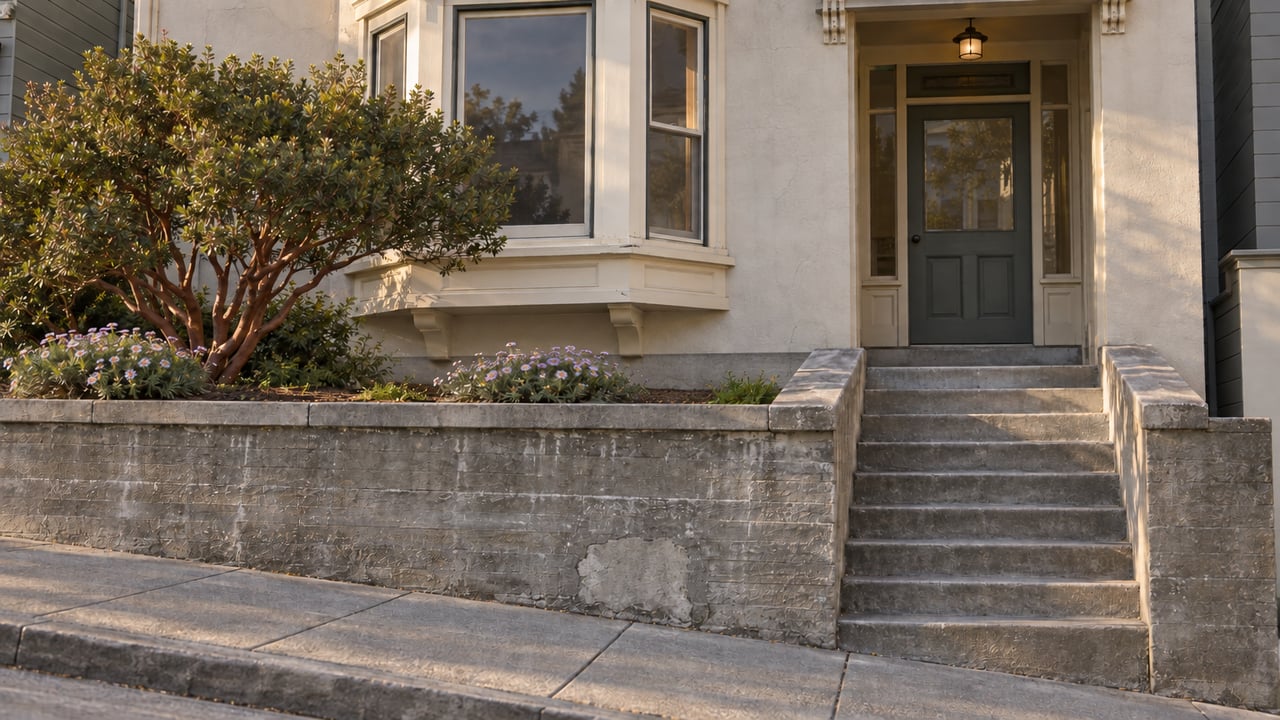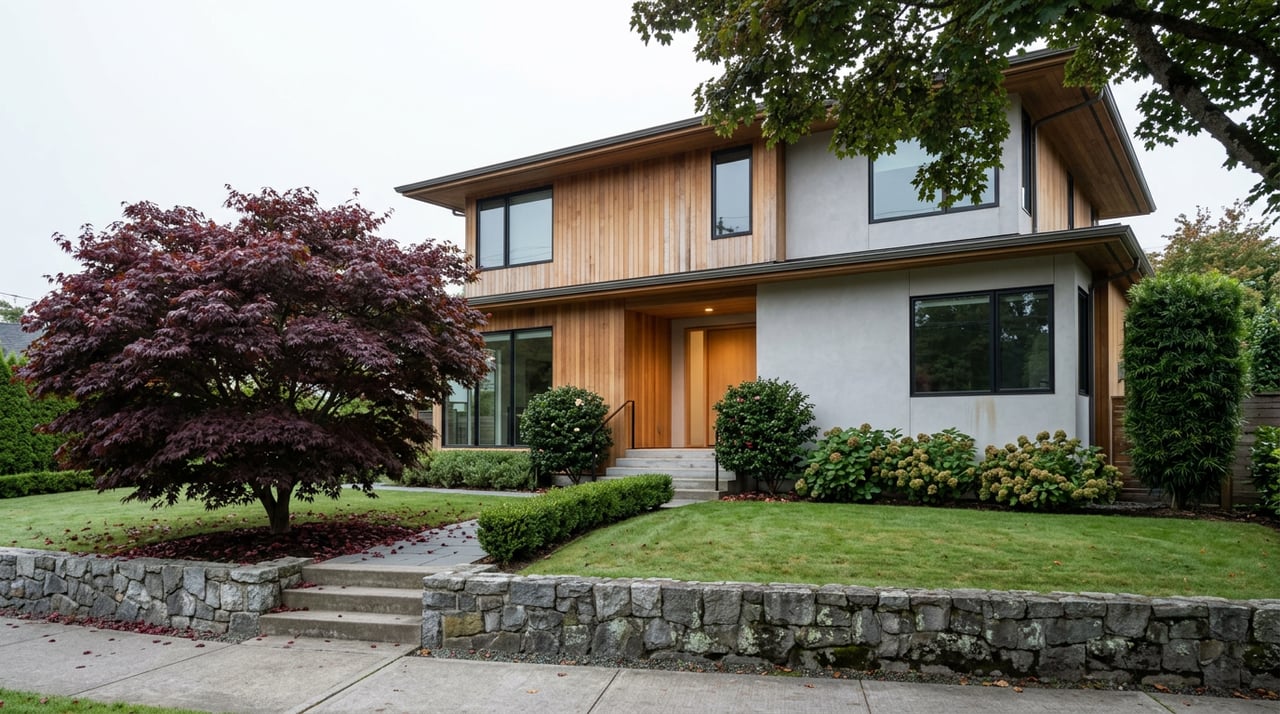
On the corner of Pacheco and Marcela, there is a vacant lot with a chain-link fence, a rendering pinned to a planning department file, and a Japanese maple that has outlived several owners of the property around it. Nothing has been built yet. Nothing may be built for months. But if you live anywhere near that corner, you already know this lot has become the most-discussed piece of real estate in Forest Hill this year, and the reason has less to do with the tree than with what the tree has exposed.
For more than a century, Forest Hill has kept its architectural harmony without much help from the city. The neighborhood was platted in 1912 as one of San Francisco's eight master-planned residence parks, and the Forest Hill Association has spent the decades since acting less like a zoning enforcer and more like a very persuasive neighbor. New construction here tends to fit the block because owners want it to fit, and because the Association makes its preferences known long before anyone reaches for a hammer. That system has worked so well, for so long, that most residents have never had to find out what happens when someone declines to go along with it. This September, they're finding out.
The lot, the plan, the objection
The project at 288 Pacheco Street is a four-story, roughly 5,050-square-foot house with five bedrooms and four bathrooms, designed by Shatara Architecture in a modern alpine style with vertical stucco panels and brick veneer. An earlier version of the plans included an accessory dwelling unit, which the applicant has since removed. The lot itself is small, just over a tenth of an acre, and it sits across from the Laguna Honda Hospital campus, a few blocks from the Forest Hill Muni station.
The dispute isn't over whether a house gets built. It's over how big. As the San Francisco Standard reported, the property owners maintain the design meets the city's 35-foot height limit. The opposition, led by neighbors, argues in their filing with San Francisco Planning that the structure actually reaches 43.5 feet when measured from a different point on the sloped lot, and that a mansard-style roof with an attached attic level pushes the massing well past what the surrounding one- and two-story homes in the Forest Hill Historic District were built to match. Planning department staff reportedly recommended a hipped or gabled roof more consistent with the neighborhood's older housing stock. The applicant went with the mansard design instead.
The vacant lot itself was once part of a property owned by two of the neighbors opposing the design, before they sold it off separately in recent years. That history matters here, because it means the fight isn't outsiders versus insiders. It's two versions of what a corner in Forest Hill is supposed to look like, argued by people who have a legitimate claim to knowing the block.
What the Association's soft power actually protects
Here's the part that a lot of Forest Hill residents haven't had to think about until now: the thing holding this neighborhood's scale together was never a zoning rule. It was consensus, backed by a private association that has real convening power but no formal authority to stop a permitted project. The Forest Hill Association can circulate a petition. It can host the meeting where neighbors compare notes on roofline heights. What it cannot do is override a Planning Commission decision.
That distinction is why this dispute has ended up in front of the city rather than settled over a fence line. A petition submitted to the Association and signed by dozens of residents raises objections about massing and the loss of tree canopy, and the opponents have been careful to frame their ask as a modification, not a blockage. As neighbor Lawrence Pitts, who has lived beside the site for 50 years, told the San Francisco Standard:
"Four stories of elevation. Structures on the roof, at the roof level, patios, and so forth."
Pitts isn't arguing against a house existing on that lot. He's arguing about scale, on a corner where the informal rulebook has always been the only rulebook. Whether the Planning Commission sides with the neighbors or the applicant, the hearing itself will be the real event: it will be the first time in years that Forest Hill's unwritten design consensus is tested by a process the neighborhood doesn't control.
Part of a bigger citywide argument
The Pacheco Street fight isn't happening in isolation. San Francisco has been publicly wrestling with how much new housing gets built and where, and Mayor Daniel Lurie's Family Zoning Plan has become the umbrella under which several of these neighborhood-level disputes now sit. In the Marina, residents have organized against a proposed 25-story apartment tower above a Safeway. In West Portal, plans to convert a long-vacant movie theater into a nine-story apartment building drew similar objections over scale and character. Citywide, construction had been completed on 405 homes in 2026 as of that early-July report, a number that gives some sense of how much building is actually happening against how much argument it's generating.
Forest Hill's version of this argument is smaller in scale, five bedrooms rather than 25 stories, but it runs on the same tension. Every one of these fights asks the same question in a different accent: who gets to decide what a neighborhood is allowed to become, the people who already live there or the process that governs what gets approved. Pacheco Street is Forest Hill's turn to answer it.
The hearing, and what happens next
A Planning Commission spokesperson has confirmed a hearing on the appeal is scheduled for September 10, 2026. Under the city's discretionary review process, commissioners have the authority to require project modifications even when a proposal technically meets code, which is exactly the outcome the opposition is asking for: not a denial, but a redesign that lowers ceiling heights, removes a roof deck, and swaps the mansard roof for something closer to what Planning staff originally suggested. If the commission grants those changes, the building's height could come down by 8 to 10 feet.
If you live on Pacheco, Marcela, or anywhere within earshot of that corner, this is the date to know. Discretionary review hearings are public, and the Planning Commission's docket for September 10 will list the item along with instructions for public comment, whichever way you land on the maple tree.
Life on the hill keeps its own calendar
None of this pauses the rest of Forest Hill's year. The Bernard Maybeck-designed Clubhouse on Magellan Avenue, built in 1919 as the neighborhood's original gathering place and still one of the city's better-preserved examples of Arts and Crafts architecture, runs its own schedule regardless of what's happening two blocks away:
- The Forest Hill Garden Club, founded in 1931, holds its monthly board and general meetings at the Clubhouse, continuing a run that makes it one of the longest-standing garden clubs in the city
- Troop 88, the Boy Scout troop that counted former Governor Jerry Brown among its members and marked its 100-year anniversary at the Clubhouse in 2022, still meets weekly
- The annual summer BBQ, the children's Halloween party, and the Holiday Party remain fixtures on the Association calendar, the same events that have brought neighbors into the Great Room for generations
- Forest Hill Musical Days, the neighborhood's chamber music festival, continues to use the Clubhouse's original wood-beamed hall as its stage
It's worth sitting with the contrast. A neighborhood that still throws an Easter egg hunt and books Boy Scout meetings a year in advance is also, right now, sending discretionary review filings to City Hall over a roofline. Both things are true because both things describe the same impulse: a genuine attachment to what this particular hill has always looked and felt like, expressed through community ritual most of the year and through formal appeal when ritual isn't enough.
What it means if you're already here
If you own a home in Forest Hill and you're ever on the other side of a similar project, the Pacheco Street case is a useful preview of how the process actually runs. The Association's opinion carries real social weight, but the leverage that changes outcomes lives in the discretionary review filing and the public hearing, not in the petition alone. Worth knowing before you're the one measuring a neighbor's roofline against the 35-foot line.
For everyone else, the September 10 hearing is simply the next chapter in a story that's been unfolding on your own streets since early summer. Whichever way the commission rules, the corner at Pacheco and Marcela will look different a year from now than it does today. Whether it looks like the rendering currently on file, or like something closer to what Pitts and his neighbors are asking for, is genuinely still an open question.
If you're weighing a project of your own on a block with this kind of unwritten design consensus, or you're curious how a discretionary review process might play out on your street, Level Up Group has spent years working inside San Francisco's micro-neighborhoods, Forest Hill included. Schedule a consultation and we'll talk through what your own corner of the city actually allows.
This article is general information, not legal, tax or financial advice. Consult a qualified professional about your situation.