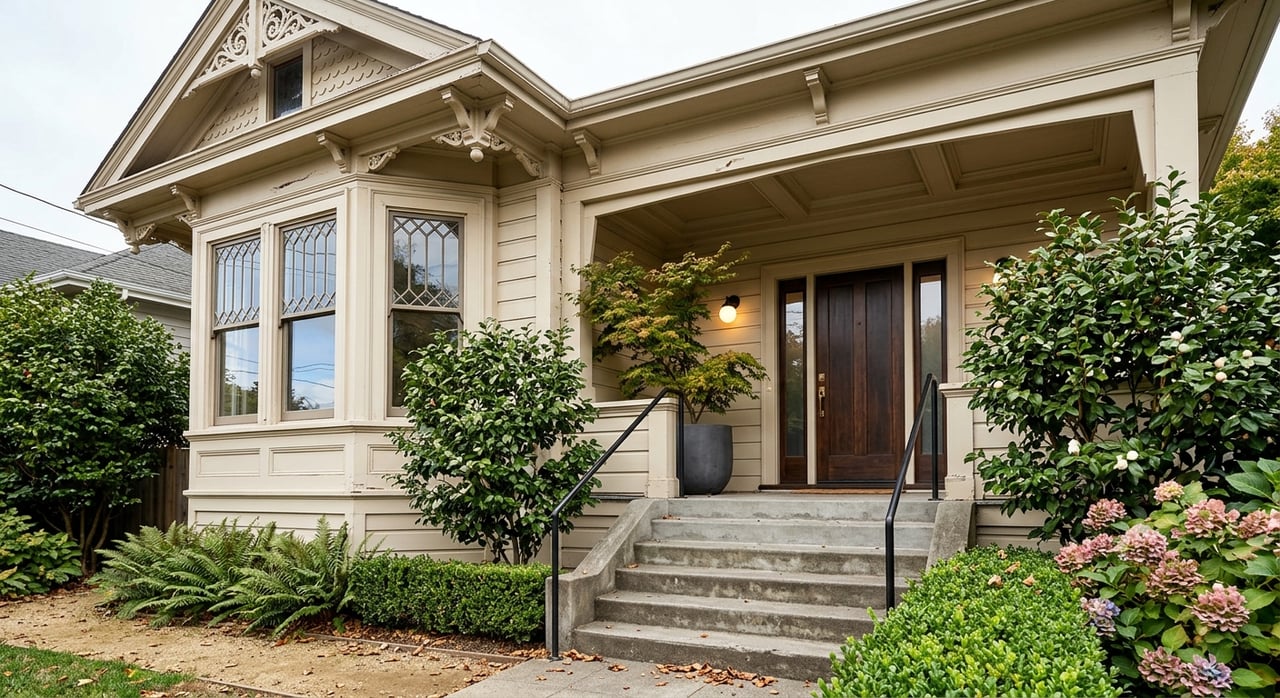
Wondering whether it makes sense to move up in Forest Hill right now? If you already love this part of San Francisco, that decision can feel more complex than a simple upgrade. You are not just comparing square footage or price. You are also weighing timing, monthly costs, and whether staying in the same west-side pocket still fits your long-term goals. This guide will help you think through the numbers, the lifestyle tradeoffs, and the practical next steps so you can move with confidence. Let’s dive in.
Why Forest Hill Stands Out
Forest Hill is part of San Francisco’s historic residence-park tradition. According to San Francisco Planning, residence parks were early 20th-century garden suburb developments with large lots, landscaped settings, and curving streets on hilly land. Forest Hill and Forest Hill Extension are specifically identified as a 1912 residence park.
That matters if you are thinking about moving up here. In many neighborhoods, a move-up decision is mostly about finding more space. In Forest Hill, it is often about keeping a setting you already value while gaining the features your next chapter needs.
For some homeowners, that could mean a larger home, more flexible interior space, or a different lot configuration. For others, it may mean staying close to the west side while comparing nearby areas rather than leaving this part of the city altogether.
What the Market Is Telling You
If you are considering a move-up purchase in Forest Hill, the current market pace deserves your attention. According to Redfin’s Forest Hill market data, the median sale price in February 2026 was $3.5 million, up 38.8% year over year, and the median sale price per square foot was $1.53K, up 56.1% year over year.
The same report says Forest Hill is very competitive, with homes typically selling in about 13 days and many receiving multiple offers. That is a fast-moving environment for any buyer, especially if you are trying to coordinate the sale of your current home with the purchase of your next one.
There is one important caution. Redfin also reported that only one home sold in Forest Hill during that month. With such low sales volume, neighborhood-level monthly numbers can swing sharply, so it is best to treat them as directional rather than definitive.
For broader context, San Francisco’s citywide housing market had a February 2026 median sale price of $1.5 million, with homes selling in about 14 days on average and 64.3% selling above list price. That tells you two things. First, the city remains competitive overall. Second, Forest Hill sits well above the citywide median, so moving up here may require a larger equity and financing jump than moving to a less expensive area.
Should You Move Up in Forest Hill?
The right answer usually comes down to three questions:
- Do you want more space or a different layout?
- Do you want to stay in a neighborhood with similar west-side character?
- Can your equity and financing support the jump?
If your current home no longer fits how you live, moving up can make sense even in a competitive market. But in Forest Hill, the decision is rarely just financial. You are also deciding how much you value the neighborhood’s distinct setting and whether you want to preserve that lifestyle while upgrading.
Start With Your Equity Position
Before you browse listings seriously, get clear on what your current home could realistically contribute to your next purchase. In a high-value neighborhood, your paper equity may look strong, but what matters is your likely net proceeds after selling costs and any mortgage payoff.
This step can answer a major question early: Do you have enough equity to move up without stretching too far? A move-up plan works best when you know your likely sale range, estimated net proceeds, target purchase budget, and monthly comfort zone before you start competing for homes.
Compare Your Monthly Payment, Not Just Price
A lot of homeowners focus on the price gap between their current home and the replacement home. That matters, but your monthly payment may change more from interest rates than from the purchase price alone.
As of March 26, 2026, Freddie Mac’s Primary Mortgage Market Survey reported the 30-year fixed mortgage rate at 6.38%, up from 6.22% the prior week and down from 6.65% a year earlier. For move-up buyers, even a small rate change can affect affordability in a meaningful way.
That is why it helps to model several payment scenarios before you make a move. Instead of asking only, “Can I buy the next house?” ask, “How will this payment fit into my broader financial life?”
Sell First or Buy First?
This is one of the biggest strategic decisions in a Forest Hill move-up plan. Because inventory is limited and homes can move quickly, there is no one-size-fits-all answer.
When Selling First May Help
Selling first can give you more clarity and less financial pressure. You know your exact proceeds, you may avoid carrying two homes at once, and you can shop with a firmer budget.
The tradeoff is timing. In a competitive neighborhood, you may feel pressure to find the right replacement home quickly after your sale unless you plan for temporary housing or negotiate a rent-back.
When Buying First May Help
Buying first can make sense if you want more control over the replacement-home search. It may also help if finding the right home matters more than strict transaction timing.
The challenge is cash flow. You may need to qualify while carrying your current home, and if your existing home has not sold yet, the financial overlap can be significant.
Proposition 19 Could Matter
If you are age 55 or older, or otherwise eligible, property taxes may be a meaningful part of your move-up analysis. According to the California Board of Equalization’s Proposition 19 guidance, eligible homeowners age 55 or older, certain severely and permanently disabled homeowners, and disaster victims may transfer their taxable base year value to a replacement principal residence anywhere in California.
The Board of Equalization also states that you file the claim after both transactions are complete and after you are living in the replacement home. Another key detail is timing: you may buy the replacement home before selling the original home, as long as the original home is sold within two years of the purchase.
If the replacement home costs more, the excess value is added to the transferred base year value. That can be helpful, but there is also a short-term planning issue. The replacement home can be taxed at full market value until the original home is sold, which can create a temporary cash-flow squeeze.
Stay in Forest Hill or Compare Nearby?
Some move-up buyers want to remain in Forest Hill specifically. Others are open to nearby west-side options that offer a similar geographic base with different housing choices.
According to the SFMTA Twin Peaks area overview and West of Twin Peaks geography, nearby comparison areas include West Portal and Saint Francis Wood. If your goal is to stay on the west side, these neighborhoods can form a practical comparison set without leaving this part of San Francisco.
This is where your priorities matter most. If your top goal is preserving Forest Hill’s specific feel, your search may need to be narrower and your budget more flexible. If your top goal is moving up in size or function while staying nearby, broadening the map could open more options.
Transit and Daily Convenience
A move-up decision is not only about the house itself. It is also about how you want your daily routine to work.
Forest Hill has direct transit relevance because the Forest Hill Muni Metro station is one of the city’s accessible subway stops. The area also benefits from the historical west-side connection created by the Twin Peaks Tunnel, which helped link these neighborhoods to downtown.
If transit access matters to your household, that can support the case for staying in or near Forest Hill. Features inside the home matter, but so does how the location supports your everyday movement through the city.
A Practical Move-Up Plan
In a neighborhood with limited sales and fast timelines, a structured plan is your advantage. A clear process can help you reduce stress and make stronger decisions.
Here is a smart way to approach it:
- Estimate your current equity and net proceeds.
- Get pre-approved and review payment scenarios.
- Define your must-haves versus nice-to-haves.
- Decide whether selling first or buying first fits your finances.
- Consider backup logistics like temporary housing or a rent-back.
- Compare Forest Hill with nearby west-side options if flexibility helps.
That kind of preparation matters even more in a market where homes can sell in less than two weeks and inventory can be tight.
Signs It May Be Time to Move Up
You may be ready to move up in Forest Hill if several of these are true:
- Your current home no longer fits your space needs
- You want to stay on the west side of San Francisco
- You have substantial equity built up
- You can manage a higher monthly payment comfortably
- You want a long-term home that better matches your next phase
On the other hand, waiting may make sense if your payment range feels too tight, your home still works well, or you are not ready to manage the timing of two linked transactions.
The Bottom Line
Moving up in Forest Hill can be a smart move, but it usually works best when the lifestyle upside and the financial plan align. This is a neighborhood where setting, location, and housing stock all play a meaningful role in the decision. You are not just upgrading a property. You are deciding how you want to live in this part of San Francisco for years to come.
If you are thinking about selling your current home and buying your next one in Forest Hill or nearby on the west side, a clear, numbers-first strategy can make the process much easier. Connect with David Juarez to schedule a consultation and build a move-up plan tailored to your goals.
FAQs
Is moving up in Forest Hill more expensive than moving elsewhere in San Francisco?
- Forest Hill’s February 2026 median sale price was $3.5 million, which was well above San Francisco’s citywide median of $1.5 million, so staying in the neighborhood may require a larger equity and financing jump.
How competitive is the Forest Hill housing market for move-up buyers?
- Redfin reported that Forest Hill homes typically sold in about 13 days in February 2026, and many received multiple offers, which suggests buyers should be prepared for a fast timeline.
Should you sell first or buy first when moving up in Forest Hill?
- Selling first can give you budget clarity, while buying first can give you more control over your replacement-home search, so the better option depends on your cash flow, financing, and tolerance for timing risk.
Can Proposition 19 help reduce property taxes when moving up in California?
- Eligible homeowners may be able to transfer their taxable base year value to a replacement principal residence anywhere in California, subject to Proposition 19 rules and timing requirements.
Which neighborhoods near Forest Hill should you compare for a west-side move-up?
- If you want to stay on the west side, nearby comparison areas include West Portal and Saint Francis Wood based on SFMTA’s neighborhood geography.
Does Forest Hill have convenient transit access for homeowners?
- Yes, Forest Hill is served by an accessible Muni Metro station, which can be an important factor if you want west-side living with rail access into the broader city.